 Stromboli Volcano Tours
Is Stromboli Worth Visiting? An Honest Verdict
Is Stromboli worth visiting? For travellers who want to watch an active volcano erupt from a boat or a dark mountainside, the answer is usually yes, and few places on Earth deliver it so reliably. For anyone expecting a beach-resort island with restaurants on tap and an easy schedule, it often disappoints. This page weighs both sides: what a day trip actually gets you, when an overnight earns its keep, what the whole thing costs, and the downsides nobody puts in the brochure. Start with the tours, because the experience you book shapes the verdict more than anything else. Browse every Stromboli volcano tour worth booking or jump straight to the side-by-side Stromboli tour comparison.
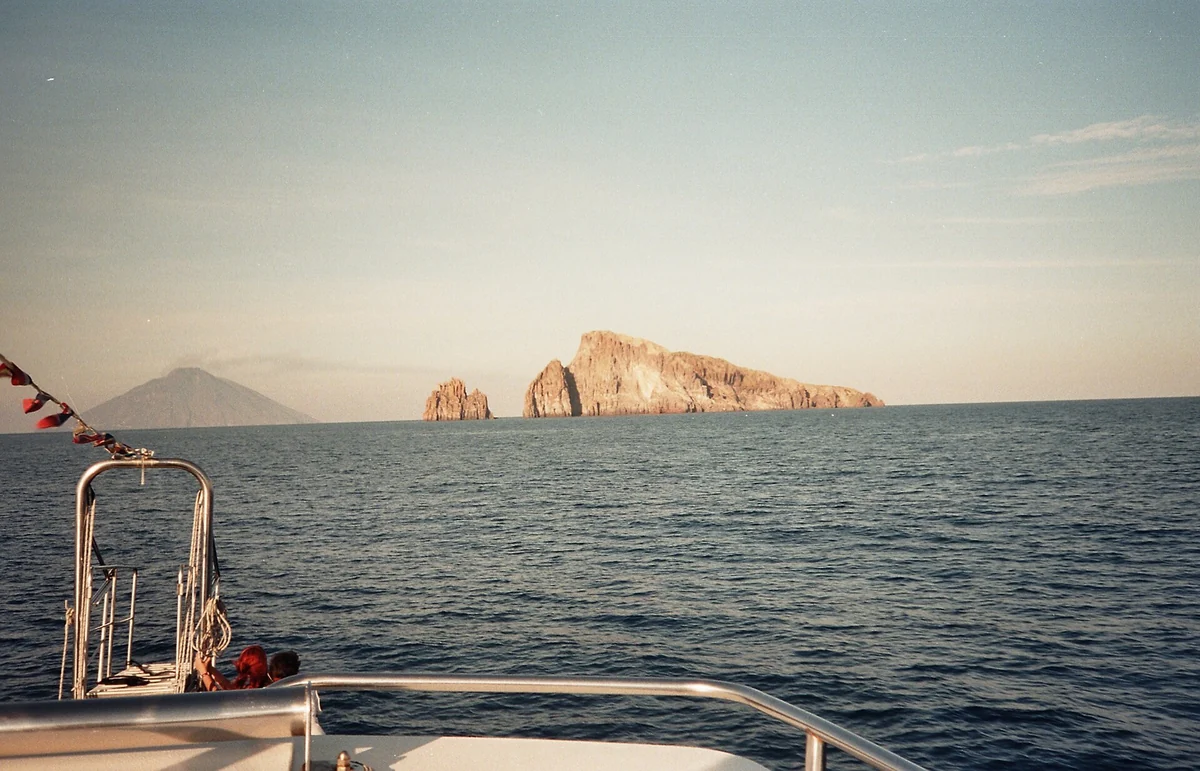
First sight from the boat: the cone holds the horizon. Photo: Vladimír Javůrek, CC0, via Wikimedia Commons
What Stromboli Actually Gives You
Before weighing the trip, it helps to be clear about what the island is and what you will actually see.
A volcano that performs most nights
Stromboli is the northernmost of the seven Aeolian Islands, about 55 km north of the Sicilian coast at Milazzo. The mountain stands 924 m above the sea and has been in near-continuous ordinary Strombolian activity for centuries, which is why volcanologists named this mild explosive style after the island itself. The pattern is small gas explosions at the crater rims, several an hour, visible after dark as glow and bursts.
That rhythm is the entire appeal. You are not waiting on a once-a-decade event. In ordinary activity, a clear evening almost always shows something, and the usual spoiler is weather rather than the volcano.
Larger explosions called paroxysms do happen, most recently in 2024 and before that in July and 2019, but they are years apart and nobody can schedule one. Any operator who promises a big burst is overselling. The Aeolian Islands are a UNESCO World Heritage site, and the volcano is monitored around the clock by INGV with a civil-protection alert protocol behind it.
That monitoring matters for your verdict in a practical way. You do not need to judge conditions yourself, because the alert system and the guide requirement do it for you, and in ordinary activity the show runs a first-time visitor or a repeat one. What you should accept before booking is the element of chance in size.
Several small explosions an hour is the baseline, so a clear evening almost certainly delivers glow and bursts, but a bigger spectacle is a bonus rather than a promise. Travellers who book expecting the baseline usually leave satisfied, and travellers who book expecting a movie usually leave disappointed. Set your expectation at the baseline and the island pays it out most nights of the sailing season.
Three places to watch from
There are three ways to watch. From the sea, a boat holds position 300 to 500 m off the Sciara del Fuoco, the steep scree funnel that channels eruptions into the sea, and most night cruises hold for about 30 minutes while crater glow reflects in the water. From the mountain, the guided trek ends on the eastern rim of the Sciara at 400 m, roughly 350 to 400 m from the craters in a straight line, close enough that you hear and feel the explosions as much as see them.
From the village, for free, the Belvedere near the old cemetery sits about 190 m above Stromboli village and catches the night glow, though you need a torch for the walk back. Each option has a different cost, effort and payoff, and the honest verdict on the island depends on which of the three you actually want. Photographers usually want the 400 m viewpoint, families and casual visitors do well from the boat, and slow travellers can string all three together over two nights.
It is worth being honest about what the boat cannot do. From the water you see the glow and the bursts against the sky, but you do not feel the shockwaves or hear the crater working the way you do from the rim. What the boat cannot offer in intimacy it returns in ease: no climb, no guide fee, no dark descent, and a stable deck for long exposures.
The Belvedere sits between the two, free but modest, best treated as an extra on an overnight rather than a substitute for either paid option. Pick your primary vantage point first, then let everything else on the island arrange itself around it.
| Where you watch | What it is | Effort | Best for |
|---|---|---|---|
| Boat off the Sciara del Fuoco | 30-minute hold 300-500 m offshore after dusk, glow and bursts over the water | None | Anyone short on time |
| Guided viewpoint at 400 m | Sciara rim walk, explosions heard and felt at close range | A real trek in the dark | Photographers and hikers |
| Belvedere above the village | Free viewpoint at about 190 m, night glow over the crater | A walk with a torch | Slow travellers on a budget |
Who Stromboli Rewards and Who It Disappoints
The island is not for everyone, and pretending otherwise is how bad reviews get written.
You will love it if
Volcano-first travellers get the best deal on the island, because the eruption is the show and it runs several times an hour. Photographers do well too: a glowing crater 350 to 400 m away at night is a rare subject, and the boat holds long enough to shoot from a stable deck. Slow-island people are the third group the island rewards.
There are roughly 580 residents, no cars beyond service vehicles, and just two settlements, Stromboli village and Ginostra, which is 10 to 15 minutes away by boat and has no road access at all. Everything is on foot or by the small passenger boats locals call a pezzo d'andata. If your idea of a good evening is a swim, a simple dinner and a dark walk to a viewpoint, this is your island.
You do not need entertainment infrastructure, because the volcano provides it. What these three groups share is a willingness to let the island set the pace. Nothing here can be hurried.
Crossings run on their own schedule, the trek leaves when the light says so, and dinner happens when the kitchen feels like it. Travellers who fight that rhythm write frustrated reviews, and travellers who surrender to it tend to call the island the best place they visited in Italy. The other thing the rewarded groups have in common is that the volcano sits at the centre of their plan rather than the edge of it.
If the eruption is your reason for coming, every friction on the island becomes part of the experience instead of an obstacle to it.
You will be disappointed if
Beach-resort travellers should look elsewhere. There is no resort strip, no marina of pleasure craft, no shopping street. A large day-cruise crowd can flood the village mid-afternoon, and once the boats leave the place goes quiet fast.
Travellers on a tight schedule also struggle. The crossings are long, the timetables thin out fast outside the season, and a single rough-sea cancellation can erase the whole plan. If you have one afternoon in Sicily and want a guaranteed spectacle, Stromboli is a risky bet.
Anyone who cannot walk unaided uphill in the dark, or who will not accept a guided-group format, will find the main event hard to reach: the free paths stop at 290 m and the good viewpoint needs a certified guide. And if your mental image is a lava fountain over the summit, reset it. What you get is rhythm, not theatre.
The verdict, honestly, is that Stromboli pays back exactly the interest you bring. The people who leave disappointed almost always came for the wrong island. It is also worth naming the expectation gap directly, because most one-star reviews on any volcano destination come from it.
The ordinary show is small: brief flashes, gas bursts, a glow that rises and fades. It photographs beautifully and it rewards patience, but it is not a firework display on demand. If you need a spectacle with a start time, a boat cruise with an entertainment programme will serve you better.
If you can sit on a dark slope and wait for the mountain to clear its throat, nothing else in Europe does it like this.
| Traveller type | What Stromboli gives them | Verdict |
|---|---|---|
| Volcano-first traveller | Eruptions several an hour, trek to 400 m with a licensed guide | Book it |
| Photographer | Glow at close range, night holds off the Sciara | Book the 400 m trek |
| Slow-island traveller | Car-free villages, swimming, dark skies, quiet dinners | Stay a night or two |
| Beach-resort traveller | Almost nothing in the way of resorts or shopping | Skip it |
| Tight-schedule traveller | Long crossings and weather risk on a single day | Risky, consider a cruise instead |
Day Trip or Overnight: What Each Actually Delivers
This is the decision that decides the trip, and it is worth separating what each format can and cannot give you.
What a day trip delivers
A day trip gets you the eruption watch from the sea and, depending on the sailing, a few hours on shore. From Milazzo the hydrofoil takes 1 to 2.5 hours in high season, and the car ferry can take up to 6.5 hours. From Naples the crossing runs 4.5 to 10.5 hours, and from Calabria there is no regular passenger ferry from Tropea at all, only a seasonal hydrofoil from Vibo Valentia about 1.5 hours long, up to twice weekly.
That is why most from-Tropea options are day cruises. A day trip is enough if you are content to watch from the water, swim off the boat and walk the village. It is not enough for the guided trek, because the sunset trek leaves about two hours before sundown and descends after dark, which does not fit a same-day return sailing from most ports.
Day trippers should also note the timetable: Milazzo to Stromboli runs year-round with 8 to a dozen sailings daily in high season, but that collapses in winter. Messina runs seasonal services up to 4 daily at 2 to 4.5 hours, Palermo is summer-only at about 6 hours, and Reggio Calabria runs seasonally at about 3 hours 45 with a connection via Lipari. The practical consequence is that your departure port decides your day trip before anything else does.
From Milazzo or Lipari, a day trip is a coherent plan with slack in it. From Naples, Palermo or Reggio Calabria, the crossing eats the day and the island becomes a stop rather than a stay, which is fine if the boat itself is the pleasure and frustrating if the mountain was the point. Count the travel hours honestly before you book anything.
What an overnight adds
An overnight unlocks the two best experiences on the island. The first is the guided sunset trek, which is the only legal way above 290 m and ends at the 400 m viewpoint on the Sciara rim. The second is the free Belvedere glow watch from the village, plus a swim in the morning before the day boats arrive.
Staying over also removes the timetable stress. If your evening hydrofoil is delayed or the sea is rough, you simply sleep on the island and take a morning boat. It costs more, of course, and accommodation options are limited on an island of 580 residents, and the details of rooms are not stated in the sources compared here.
A sensible pattern for many travellers is one night: arrive on a midday boat, swim, do the Stromboli volcano hike at sunset, sleep, watch the glow from the Belvedere or take the night eruption cruise the next evening and leave on a morning sailing. Get the crossing options straight first on the how-to-get-to-Stromboli page. The single night also changes how the island feels.
Day visitors meet Stromboli in its busiest hours, when the boats disgorge their crowds and the village fills. Overnight guests get the other island, the one after the last hydrofoil leaves, when the lanes empty, the sound of the sea comes back and the mountain owns the horizon again. That contrast is a large part of why people who stay rate the island higher than people who do not.
If your dates allow it and the volcano is genuinely why you are going, the overnight is the format that matches the trip to the reason.
| Format | What you can fit in | Verdict |
|---|---|---|
| Day trip from Milazzo | Sea watch from the boat, village walk, swim if timing allows | Fine for the eruption from the water |
| Day trip from Naples or Calabria | Mostly a cruise, long crossing either way | Only if a cruise is the plan anyway |
| One overnight | Sunset trek to 400 m, Belvedere glow, morning swim | The sweet spot for most |
| Two or more nights | Both formats, plus Ginostra by passenger boat | For slow-island travellers |
The Honest Downsides
Every island sells its best face. These are the frictions worth knowing before you book.
Long crossings and thin timetables
The first downside is simply getting there. From Milazzo, the practical mainland port, the fastest hydrofoil still takes 1 to 2.5 hours, and Milazzo itself is roughly 2.5 hours from Catania by road or train via Messina. Add it up and a day trip from Catania is a ten-hour round journey for a few hours on the island.
The full sailing timetable collapses in winter, when inter-island hydrofoils thin out and day trips become unreliable. The volcano keeps erupting all year, but the boats do not. The main season runs April to early November, with June to September offering warm sea, reliable sunset timing and every departure operating.
May, June and September are the sweet spot, when the sailing season is in full swing, the sea is warm enough to swim and the villages are calmer. October is quiet with the first storms possible. The deeper point behind the timetable is that Stromboli is a working transport route, not a tourist shuttle.
The boats that carry you also carry residents, post and supplies, so when the sea is rough they simply do not run, and nobody reorganises the schedule for your booking. Build slack into any plan that depends on a specific sailing. If a missed boat would ruin your wider Sicily itinerary, treat Stromboli as an overnight destination or as an add-on day with nothing fixed behind it.
Travellers who give the island a buffer rarely have a bad trip, and travellers who chain it tightly to a flight the next morning are the ones who end up rewriting plans at a port counter.
Budget boats, dark descents and small print
The second cluster of downsides is practical. Budget sailings on the ferries can be announced in Italian only, which catches travellers out at the port, and the disembarkation fee of $5.85 (EUR 5) per person is collected in cash before boarding on most sailings, so arrive with notes. On the trek itself, the descent is in the dark.
Sunset treks leave about two hours before sundown and come down after nightfall, which is exactly why the licensed-guide rule exists: from 290 m to 400 m you may only walk with a certified Alpine-Volcanological guide under the Mayor of Lipari's standing ordinance, and above 400 m the mountain is closed outright, a rule in force since the 2019 paroxysmal eruptions in which one hiker died. Bring 1.5 to 2 litres of water per person, closed hiking shoes and a layer for the top, because it gets cold after dark even in summer. The 2019 paroxysm and the 2024 paroxysm are reminders that this is a real volcano, monitored 24/7 by INGV, not a theme park.
Staying inside the altitude limits with a guide is the whole safety system. None of this is a reason not to go. It is a reason to book with eyes open.
The packing list deserves emphasis because it is where most trek complaints start. The path is volcanic scree and loose footing, the temperature drops sharply once the sun goes, and the last hour back is walked by torchlight down the same slope. Anyone with uncertain knees, poor night vision or unsuitable footwear should choose the boat instead and enjoy the show from the water, which is a genuinely good vantage point rather than a consolation prize.
| Downside | How bad it is | Can you plan around it |
|---|---|---|
| Crossings of 1 to 10.5 hours depending on port | Significant from anywhere but Milazzo or Lipari | Yes, pick the nearest port |
| Italian-only announcements on budget boats | Annoying, occasionally costly | Yes, confirm times in advance |
| Cash landing fee at the port | Minor | Yes, carry $5.85 (EUR 5) per person in cash |
| Dark descent after the sunset trek | Physical, needs proper shoes and a layer | Yes, pack for it |
| Winter timetable collapse | Day trips unreliable November to March | Only by going in season |
What It Costs: The Real Price of a Stromboli Trip
The volcano has no ticket gate, but the journey and the boat fees add up. Here is what is actually mandatory.
Mandatory payments, and only two of them
There is no entrance ticket for the volcano itself. The only mandatory payments are the Aeolian Islands disembarkation fee of $5.85 (EUR 5) per person, collected in cash at the port or ticket office on most sailings, and, when travelling from Milazzo in season, the port eco tax of about $5.85 (EUR 5) per person from the start of June to the end of September, dropping to about $2.90 (EUR 2.50) in October. One competitor listing mentions a further $3.50 (EUR 3) entry ticket, but no official source confirms any such fee, so treat that with suspicion.
Everything else is optional and priced by operators, and tour prices vary by departure port, boat and whether the guided trek is included, so the fairest way to see the spread is to look at the listings directly. Note that listings often quote US dollars while Italy bills in euros, so check which currency you are actually paying in. It is also worth separating the fixed costs from the variable ones when you budget.
The landing fee and the eco tax are fixed and small, so the real spread between a cheap and an expensive trip comes from three things: your departure port, your boat type and whether the guided trek is in the price. A hydrofoil from Milazzo costs far less in time and usually in money than a seasonal service from Naples, and two listings can look similar until you notice that one includes the trek and one sells it separately. Read the inclusions line before the price line, because that is where the difference hides.
How the two formats compare on cost
A day trip costs you the crossing, the landing fee and possibly the eco tax, and nothing else if you walk the free paths. The free zone runs up to 290 m on the village side, which includes the Belvedere near the old cemetery at about 190 m, and that alone is enough to see the night glow if your sailing timing allows. An overnight adds accommodation, which is not priced in the sources compared here, plus the guided trek above 290 m, which is sold by operators at prices set by the operator and shown live on the listings.
The guided zone exists because the guide requirement is law, not a sales device, and guides carry helmets, set the pace and read the volcano's behaviour in real time. When you weigh the two formats, remember that the trek is the single experience most people remember years later, so if the volcano is the reason you are going, budget for the guide rather than trimming it. A useful way to frame the choice is cost per memory rather than cost per day.
The crossing and the fees buy you the island, and the island is pleasant. The guided trek buys you the thing almost nobody else on Earth can sell: a dark mountainside 350 to 400 m from an erupting crater, legally and safely. Trim the trek to save money and you keep a nice island but lose the headline.
Trim almost anything else first, a fancy room, an extra dinner, a second night, and the trip keeps its point intact.
| Cost item | Amount | Who pays it | Verdict |
|---|---|---|---|
| Landing fee, Aeolian Islands | $5.85 (EUR 5) per person, cash | Nearly all arrivals | Unavoidable, carry cash |
| Milazzo port eco tax, June to September | About $5.85 (EUR 5) per person | Milazzo departures | Unavoidable in season |
| Milazzo port eco tax, October | About $2.90 (EUR 2.50) per person | Milazzo departures | Unavoidable in season |
| Volcano entry ticket | None stated by official sources | Nobody | Not a real fee |
| Guided trek above 290 m | Operator-set, see listings | Anyone going above 290 m | Legally required, worth it |
Fun Things to Do on Stromboli Beyond the Eruption
One of the most common questions from planning travellers is what fills the hours when you are not staring at the crater.
On the mountain and in the village
The free path network on the village side is the first answer. You can walk from Piazza San Vincenzo up to the Belvedere viewpoint near the old cemetery at about 190 m, entirely free and without a guide, which is a good leg-stretcher on a day trip and a fine dusk outing on an overnight. The walk up through the village lanes is part of the pleasure: whitewashed houses, bougainvillea, no traffic noise because there is no traffic.
Ginostra, the second village, is 10 to 15 minutes away by small passenger boat and has no road access, so visiting it is an outing in itself rather than a plan you can build infrastructure around. The listing sources note it has no volcano-path tourism worth planning around, so treat it as a boat ride and a slow lunch rather than a hike. Lower walks also earn their keep as acclimatisation.
An hour on the free paths tells you how your legs handle volcanic slopes and how the island's heat sits on you, which is useful information if you are deciding between the boat and the trek for your main event. The village itself rewards unhurried wandering in the late afternoon, when the day-cruise crowds have thinned and the light turns warm on the whitewash. There is no monument to tick off and no queue to join, and that is precisely the appeal for the travellers this island suits.
Budget your idle hours generously, because idle here means watching the mountain, and the mountain is always doing something.
On and in the water
Swimming is the other filler, and the season shapes it. June to September gives you a warm sea, and May, June and September combine swimmable water with calmer villages. Most boat tours include swim stops, and the classic night eruption cruise pairs a late-afternoon swim or coastal cruise with the 30-minute hold off the Sciara del Fuoco after dusk.
Bring swimwear, a towel and a windproof layer for the evening run home, because the crossing back gets cold even after a hot day. Photographers should also plan for the light rather than only the volcano: the sunset trekking window, roughly April to October, runs when the light is long, and the boat holds happen after dark when the glow is at its best. Eruptions are visible year-round when the volcano is in ordinary activity and the sky is clear, but the boats only sail in season, so the practical window for combining swimming and eruption watching is the sailing season itself.
For the full breakdown of departure ports and timings, the how-to-get-to-Stromboli guide has the detail. The water around the island is worth treating as an attraction in its own right rather than a gap-filler. Swim stops off a volcanic coastline, with black sand and the cone in view, are a different experience from a Mediterranean beach afternoon, and they cost nothing extra on most cruises.
If you are booking in the sweet-spot months, plan the swim for the afternoon and the eruption for after dark, and one boat ticket covers the best two hours of the day.
| Activity | Season or rule | Verdict |
|---|---|---|
| Free walk to the Belvedere at 190 m | Always, no guide needed | Do it on every visit |
| Guided trek to the 400 m viewpoint | Sunset departures, roughly April to October | The headline experience |
| Night boat hold off the Sciara | In season, about 30 minutes after dusk | Best low-effort option |
| Swim stops from the boat | Warmest June to September | Book in the sweet-spot months |
| Boat to Ginostra | 10 to 15 min each way, no roads | A slow-day outing only |
Quick answer Stromboli is worth visiting if the volcano itself is the reason you are going. It has been in near-continuous ...
Stromboli is worth visiting if the volcano itself is the reason you are going. It has been in near-continuous ordinary Strombolian activity for centuries, with small gas explosions at the crater rims several times an hour, visible as glow and bursts after dark. In ordinary activity a clear evening almost always shows something. The island rewards volcano-first travellers, photographers and slow-island people. It disappoints travellers with beach-resort expectations or a tight schedule, because the crossings are long, the timetable collapses outside April to early November, and there is very little else on the island. Roughly 580 people live here, there are no cars beyond service vehicles, and everything happens on foot or by small passenger boat. A day trip from Milazzo delivers the eruption watch from the sea and, on some sailings, a few hours in the village. An overnight adds the guided trek to the 400 m viewpoint on the Sciara del Fuoco rim, the free Belvedere glow watch, a swim and a slow dinner. The downsides are real: crossings of one to six and a half hours depending on the boat, budget sailings announced in Italian only, a mandatory landing fee, and a walk back from the viewpoint in the dark. If that sounds like a lot of friction for one volcano, it probably is. If it sounds like the point, book the trek.
Key takeaways
- Two ways in: the guided Stromboli volcano hike to the 400 m viewpoint, or the night eruption cruise from the water
- The crater rim above 400 m has been closed since 2019, so no operator sells a true summit hike today
- The only mandatory payments are a landing fee of $5.85 (EUR 5) per person and, from Milazzo in season, a port eco tax of $5.85 (EUR 5) per person
- Compare dates and departure ports on the side-by-side Stromboli tour comparison before you commit to a crossing
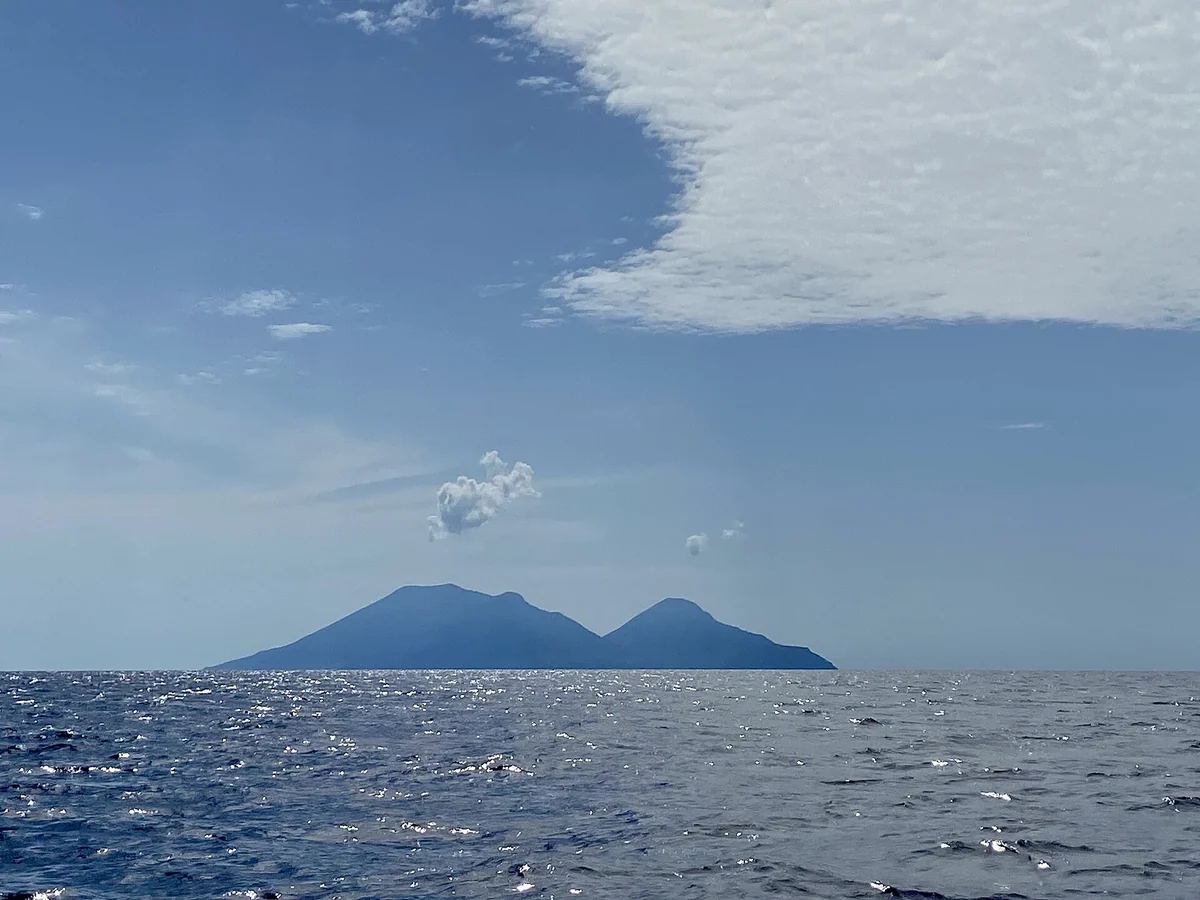
Clear water over volcanic rock: the swim-stop sea. Photo: I viaggi della Van, CC BY-SA 4.0, via Wikimedia Commons
So, Is Stromboli Worth It For You?
Match your trip to the format that fits, then book the matching listing.
If The volcano is the whole reason for your trip
Stay one night at least and book the guided sunset trek to the 400 m viewpoint. It is the only legal route above 290 m and the closest you can get
If You have a single day and you are based in Sicily
Take a Milazzo hydrofoil day trip, watch the eruptions from the boat after dusk, and walk the free path to the Belvedere if your shore time allows
If You want a beach holiday with a volcano bonus
Choose a different island. Stromboli has no resort infrastructure and rewards a different kind of traveller
If You are travelling between May and September and can move slowly
Two nights covers the trek, the night cruise, a swim and a Ginostra boat ride without touching a timetable
The Case For and Against
What we genuinely like
- Near-continuous eruptions, several small explosions an hour, so a clear evening almost always delivers
- A licensed-guide trek to 400 m puts you about 350 to 400 m from the craters, close enough to feel them
- Free viewing exists, from the Belvedere at 190 m and from any boat holding off the Sciara del Fuoco
- Car-free villages, around 580 residents, UNESCO-listed archipelago
The honest downsides
- Crossings are long from everywhere, 1 to 2.5 hours even from Milazzo by hydrofoil
- The winter timetable collapses, so November to March day trips are unreliable
- Above 400 m is closed, so a true summit hike is impossible no matter what a listing implies
- The sunset trek descends in the dark and needs water, closed shoes and a warm layer
Who it's NOT for: Beach-resort travellers, anyone with a single fixed afternoon in Sicily, and travellers who cannot manage a dark uphill walk with a guided group.
Is it worth staying on Stromboli?
Yes, if the volcano is the reason for your trip. An overnight unlocks the guided sunset trek to the 400 m viewpoint, which a day trip cannot fit because the trek leaves about two hours before sundown and returns after dark. Staying over also adds the free Belvedere glow watch at about 190 m, a quiet morning swim before the day boats arrive, and protection against a delayed or cancelled evening sailing. For slow-island travellers, two nights covers the trek, the night cruise and a boat ride to Ginostra without rushing. For anyone whose interest ends at a boat-based eruption watch, a day trip from Milazzo is enough and cheaper.
What are some fun things to do on Stromboli island?
The headline is watching the volcano, three ways: from a boat holding 300 to 500 m off the Sciara del Fuoco after dusk, from the guided trek's viewpoint at 400 m, or free from the Belvedere near the old cemetery at about 190 m. Beyond that, walk the free village-side paths up to 290 m, swim on warm-season days, and take the small passenger boat to Ginostra, the other village, which has no road access and is 10 to 15 minutes away. There are no cars, no resorts and no shopping streets, so the island rewards walking, swimming and long dinners rather than attractions.
What is Stromboli famous for?
Its volcano, and for lending its name to an entire style of eruption. The mountain has been in near-continuous ordinary Strombolian activity for centuries, meaning small gas explosions at the crater rims several times an hour, and volcanologists call this mild explosive pattern Strombolian because Stromboli is its textbook case. It is one of the most active volcanoes on Earth, standing 924 m tall on an island of roughly 580 residents, the northernmost of the seven Aeolian Islands. Rare larger explosions called paroxysms occurred in July and 2019 and 2024, but they are years apart rather than a daily event.
How far is Stromboli from Sicily?
About 55 km north of the Sicilian coast at Milazzo, which is the practical mainland port. The hydrofoil crossing from Milazzo takes 1 to 2.5 hours and the car ferry up to 6.5 hours, with 8 to a dozen sailings daily in high season. Milazzo itself is roughly 2.5 hours from Catania by road or train via Messina. From Lipari the crossing is roughly 1 to 1.5 hours, and Naples sits much further away at 4.5 to 10.5 hours. So while the island belongs to Sicily administratively, it is a genuine sea journey from the mainland rather than a quick hop.
Is one day on Stromboli enough?
It is enough for the eruption from the water, and not enough for the trek. A Milazzo day trip can include the 30-minute boat hold off the Sciara del Fuoco after dusk, where crater glow and bursts reflect in the sea, plus a few shore hours if the sailing allows. What it cannot fit is the guided sunset trek, because that leaves about two hours before sundown and descends in the dark, after the day boats have gone. There is also weather risk: a rough sea or a thin timetable can erase a single-day plan entirely. If the trek matters to you, stay the night.
How often does Stromboli erupt, and is it safe to visit?
In ordinary activity the craters burst several times an hour, so on a clear evening you almost always see something. The volcano is monitored around the clock by INGV with a civil-protection alert protocol. Safety depends entirely on staying inside the altitude rules: paths are free up to 290 m, a certified Alpine-Volcanological guide is legally required from 290 m to 400 m, and everything above 400 m has been closed since the 2019 paroxysmal eruptions, which killed one hiker. A strong paroxysm in 2024 caused no fatalities. Paroxysms are years apart, and no tour can guarantee a large burst. Respect the limits and the risk is managed.